Frequently Asked Questions (FAQs)

What is the TR412 made of?
The body is EPDM synthetic rubber, which is required by SAE standards for snap-in valve stems because it resists ozone, UV exposure, and extreme temperatures far better than natural rubber. It stays flexible in cold weather and will not crack under normal road conditions. The valve core is brass with chrome plating and comes pre-installed.
What is the maximum inflation pressure?
The TR412 is rated for a maximum cold inflation pressure of 65 PSI, which covers all standard passenger car and light truck tire requirements. For commercial, high-pressure, or heavy-duty truck applications requiring more than 65 PSI, a metal bolt-in valve stem should be used instead.
How is the TR412 installed?
The stem is inserted from the inside of the rim and pulled through the valve hole using a valve installation tool until it snaps securely into place. Do not over-stretch the rubber during installation and make sure the stem is seated straight, not tilted. A proper valve tool is recommended for consistent, undamaged installs.
Can the TR412 be used on TPMS-equipped wheels?
No. TPMS sensors require a dedicated TPMS valve stem, either a rubber snap-in TPMS valve or a clamp-in metal TPMS valve depending on the sensor. The TR412 is for non-TPMS tubeless wheels only.
How often should valve stems be replaced?
Most OEM guidelines and tire industry best practices recommend replacing rubber valve stems every time new tires are mounted. Rubber degrades over time from ozone exposure, heat cycling, and age, which can cause slow leaks even if the tire itself is fine.

TR412 Rubber Snap-In Tire Valve Stem - 0.453" - 25 Valves

    Product form

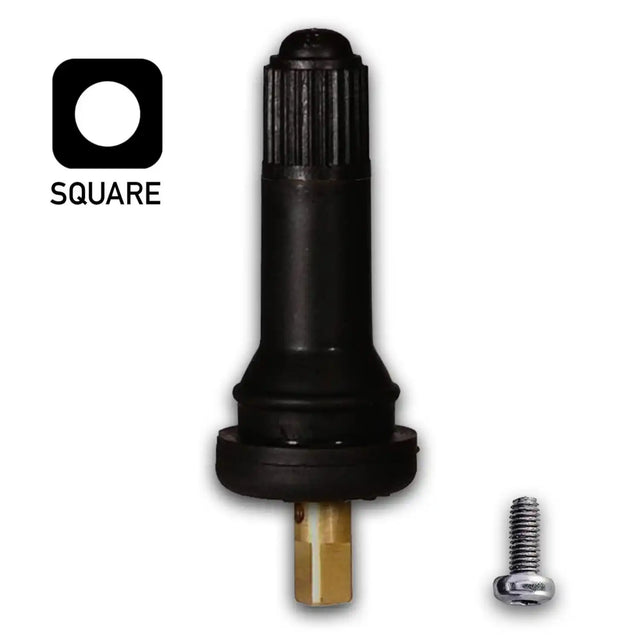
    The TR412 is a short-profile rubber snap-in tire valve stem for tubeless passenger car, light truck, and SUV tires. Fits the standard 0.453" valve hole with a compact 1-1/4" overall length - the right choice when minimal stem height is required.

    • Overall Length: 1-1/4" - compact profile for standard wheel flanges on passenger and light truck applications.
    • Valve Hole: 0.453" - fits the standard diameter found on the majority of passenger car and light truck wheels.
    • Max Cold Pressure: 65 PSI - rated for all standard passenger car and light truck inflation requirements.
    • EPDM Rubber Body: Weather and ozone-resistant compound maintains an airtight seal in all conditions.
    • Standard Schrader Core: Chrome-plated Schrader-type core for consistent, leak-free service.
    • Pack Size: Sold in 100-piece bags - standard shop quantity for tire service operations.
    Read More
     

    Quantity:

    Free Shipping! or Pickup at Pomona Warehouse

    Frequently Asked Questions (FAQs)

    What is the TR412 made of?
    The body is EPDM synthetic rubber, which is required by SAE standards for snap-in valve stems because it resists ozone, UV exposure, and extreme temperatures far better than natural rubber. It stays flexible in cold weather and will not crack under normal road conditions. The valve core is brass with chrome plating and comes pre-installed.
    What is the maximum inflation pressure?
    The TR412 is rated for a maximum cold inflation pressure of 65 PSI, which covers all standard passenger car and light truck tire requirements. For commercial, high-pressure, or heavy-duty truck applications requiring more than 65 PSI, a metal bolt-in valve stem should be used instead.
    How is the TR412 installed?
    The stem is inserted from the inside of the rim and pulled through the valve hole using a valve installation tool until it snaps securely into place. Do not over-stretch the rubber during installation and make sure the stem is seated straight, not tilted. A proper valve tool is recommended for consistent, undamaged installs.
    Can the TR412 be used on TPMS-equipped wheels?
    No. TPMS sensors require a dedicated TPMS valve stem, either a rubber snap-in TPMS valve or a clamp-in metal TPMS valve depending on the sensor. The TR412 is for non-TPMS tubeless wheels only.
    How often should valve stems be replaced?
    Most OEM guidelines and tire industry best practices recommend replacing rubber valve stems every time new tires are mounted. Rubber degrades over time from ozone exposure, heat cycling, and age, which can cause slow leaks even if the tire itself is fine.

      Recently Viewed

        Account Access

        Forgot your password?

        Create Account
        Fast Checkout, Past Orders & Deals!